
Sales Automation
AI Sales Automation: How to Automate Lead Management and Sales Workflows
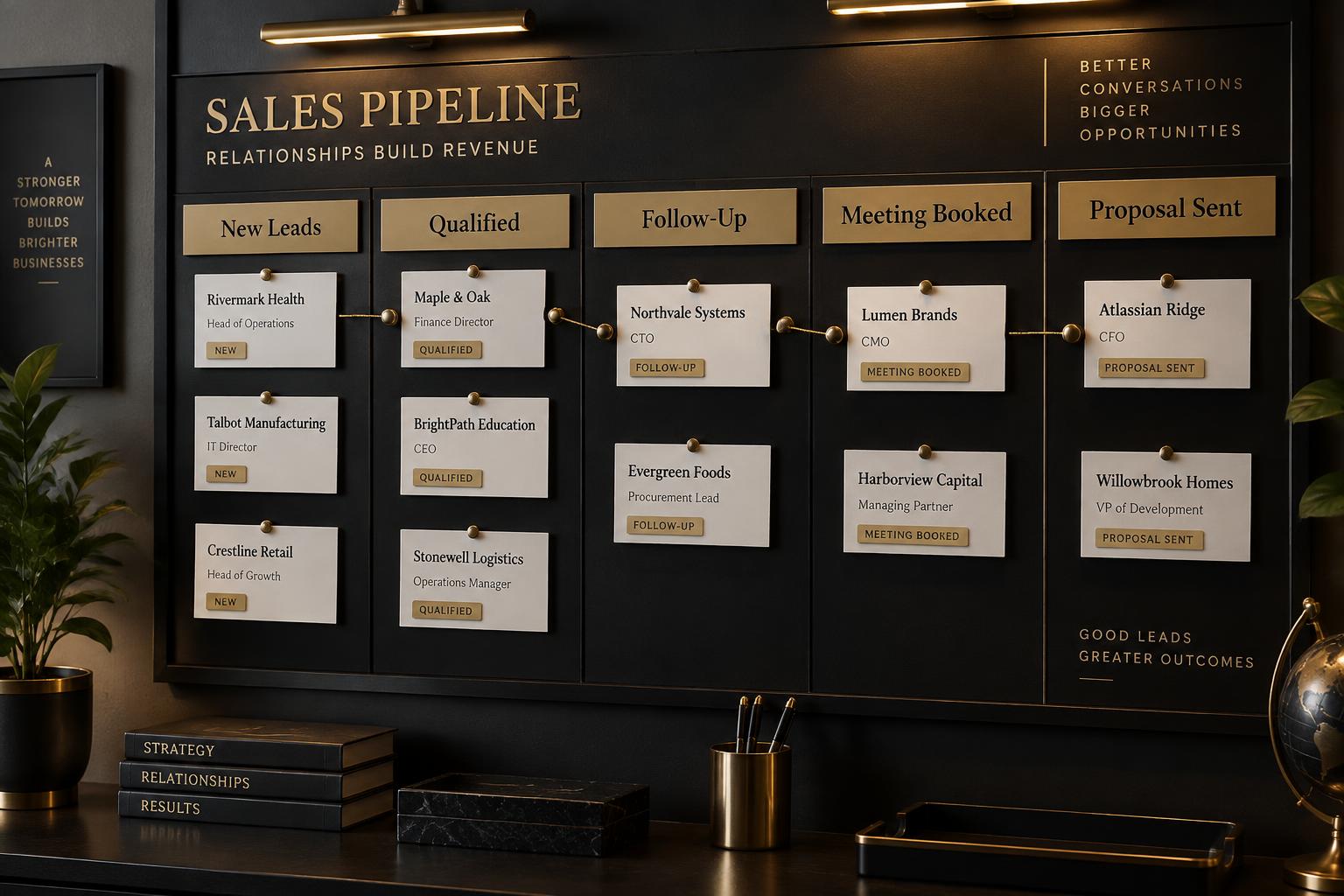
Sales teams spend a considerable amount of time on activities outside direct selling.
These include researching prospects, collecting lead information, qualifying enquiries, updating CRM records, preparing follow-ups, scheduling meetings, and managing sales pipeline information.
When these activities are handled manually, important opportunities can be delayed or overlooked, particularly when a business receives more enquiries than its sales team can process efficiently.
AI sales automation uses artificial intelligence and connected workflows to streamline sales activities such as lead qualification, prospect research, CRM management, follow-up, and meeting coordination.
Rather than simply generating sales emails, a well-designed AI sales system can connect different stages of the sales process and help ensure that prospects receive relevant attention and sales representatives have the information they need.
What Is AI Sales Automation?
AI sales automation is the use of artificial intelligence and automated workflows to handle or assist recurring activities within the sales process.
It combines AI capabilities with existing sales tools to interpret information, prioritise leads, prepare communication, update records, and coordinate next steps.
Depending on the business requirements, an AI sales system may integrate with:
- CRM platforms.
- Website enquiry forms.
- Email services.
- Calendar applications.
- Sales engagement platforms.
- Prospect research tools.
- Customer databases.
- Proposal and document systems.
The objective is to reduce the administrative workload associated with selling while helping sales teams focus on qualified prospects and meaningful customer conversations.
How Does AI Sales Automation Work?
An AI sales automation workflow typically combines lead capture, information analysis, business rules, and automated actions.
1. Lead Capture
The process begins when a potential customer expresses interest.
A lead might come from:
- A website enquiry form.
- A product demonstration request.
- An inbound email.
- A social media campaign.
- A webinar or event.
- A referral.
- An advertising campaign.
The system captures the information and sends it into the relevant sales workflow.
2. Lead Research and Enrichment
AI can help interpret the information provided by a prospect and retrieve additional context from approved data sources.
Depending on the available information, this could include the prospect's company, industry, job role, business requirements, and other relevant qualification details.
The objective is to give the sales team a more complete picture of the opportunity.
3. Lead Qualification
The system evaluates the prospect against criteria defined by the business.
For example, a B2B company may assess:
- Industry.
- Company size.
- Job role.
- Business requirements.
- Budget information, when available.
- Purchase timeline.
- Level of interest.
AI can help interpret responses and classify prospects, while explicit business rules determine how leads are prioritised and routed.
4. Automated CRM Updates
Once the required information has been collected, the system can update the CRM.
This may include:
- Contact details.
- Company information.
- Lead source.
- Qualification status.
- Relevant business requirements.
- Assigned salesperson.
- Follow-up status.
This reduces the need for sales representatives to manually transfer information between systems.
5. Follow-Up and Meeting Coordination
Based on the lead's qualification and engagement, the workflow can prepare or send appropriate follow-up communication.
It can also notify the assigned representative, create tasks, and coordinate meeting scheduling through connected calendar applications.
Communication should follow approved targeting, consent, and sending rules. Sensitive or unusual responses can be routed to a salesperson.
Practical Use Cases for AI Sales Automation
1. Lead Qualification and Scoring
Not every lead has the same level of buying interest or suitability.
Sales teams need a way to identify which prospects are more likely to benefit from their products or services.
AI can analyse submitted information and compare it with the company's ideal customer criteria.
For example, a B2B business may use AI to identify:
- Prospects from relevant industries.
- Companies that meet its size requirements.
- Decision-makers or relevant stakeholders.
- Enquiries showing a clear business need.
- Prospects requesting a product demonstration.
The system can then classify leads according to the company's qualification rules and notify sales representatives about suitable opportunities.
AI should not treat incomplete information as confirmed facts. Unverified qualification details should remain clearly identified.
2. Automated Lead Follow-Up
Many businesses collect enquiries but struggle to maintain consistent follow-up.
AI sales automation can help ensure that eligible prospects receive timely communication.
A workflow may:
- Receive a new enquiry.
- Retrieve the lead's information.
- Determine the appropriate follow-up path.
- Prepare a relevant message.
- Send the message according to approved rules.
- Monitor responses.
- Update the CRM.
- Notify a sales representative when the prospect responds or meets an agreed condition.
This helps reduce the manual work involved in keeping prospects engaged.
3. Prospect Research
Researching potential customers can take time, especially for B2B sales teams targeting organisations with specific characteristics.
AI can help collect and summarise information from approved sources.
A prospect research workflow may gather:
- Company background.
- Industry information.
- Available product or service information.
- Public business developments.
- Potential business requirements.
- Relevant context for an initial sales conversation.
The output can be added to the CRM or delivered to the sales representative as a prospect briefing.
Research should distinguish verified information from assumptions and should use sources that the business is authorised to access.
4. CRM Data Management
Sales representatives often spend time updating CRM records after calls, emails, and meetings.
AI can assist by:
- Summarising sales conversations.
- Extracting relevant information.
- Preparing call notes.
- Updating contact records.
- Creating follow-up tasks.
- Identifying missing information.
- Flagging duplicate records.
Employees should be able to review important updates, particularly when the system is working with ambiguous or incomplete information.
5. Automated Meeting Scheduling
Once a prospect is ready to speak with a sales representative, the system can help coordinate a meeting.
A workflow can:
- Identify the prospect's request for a meeting.
- Check the appropriate calendar.
- Present available times.
- Collect the prospect's preferred slot.
- Confirm the booking.
- Create or update the CRM activity.
- Notify the assigned salesperson.
This reduces the back-and-forth often involved in scheduling sales conversations.
6. Proposal and Quote Preparation
Preparing proposals and quotations can involve collecting customer requirements, retrieving pricing information, and assembling documents.
AI can help organise the information and prepare a first draft using approved templates and data.
For example, a system may extract a prospect's requirements from an enquiry, identify the relevant product or service, and prepare a proposal draft for review.
Pricing, contractual terms, discounts, and other commercial commitments should remain subject to the business's approval process.
7. Sales Pipeline Reporting
Sales managers need accurate information about leads, opportunities, follow-ups, and deal progress.
AI automation can help collect and organise CRM data, identify incomplete records, and prepare summaries.
A reporting workflow may highlight:
- Leads without assigned owners.
- Opportunities without recent activity.
- Overdue follow-up tasks.
- Changes in pipeline value.
- Deals approaching expected closing dates.
- Records requiring additional information.
This improves visibility into sales activity without relying entirely on manual reporting.
Example: An AI-Powered Lead Qualification and Follow-Up Workflow
Consider a service company that receives enquiries through its website.
Its sales team currently reviews each submission, checks whether the prospect is suitable, updates the CRM, and sends follow-up messages manually.
An AI-powered workflow could coordinate the process:
- A prospect submits the website enquiry form.
- The system captures the contact and company information.
- AI interprets the prospect's stated needs.
- The system evaluates the lead against defined qualification criteria.
- The CRM record is created or updated.
- The lead is classified according to its qualification status.
- A suitable follow-up message is prepared or sent under approved rules.
- Qualified prospects are assigned to the appropriate salesperson.
- A notification is sent to the salesperson with the prospect's information.
- The system updates the CRM when new engagement occurs.
The sales representative receives a more organised lead with relevant context, rather than having to manually collect information from several places.
What Are the Benefits of AI Sales Automation?
Faster lead handling: New enquiries can be processed and routed without waiting for every administrative step to be completed manually.
More consistent follow-up: Automated workflows can help ensure that eligible leads receive the appropriate next communication.
Reduced CRM administration: AI can assist with data extraction, record updates, summaries, and task creation.
Better lead prioritisation: Qualification criteria and relevant prospect information can help sales teams focus on suitable opportunities.
More organised sales operations: Connected workflows can reduce disconnected activities across forms, email, CRM, and scheduling systems.
More time for selling: Reducing repetitive administrative work allows sales representatives to spend more time on customer conversations and opportunity development.
The actual results depend on lead quality, sales process design, response strategy, data accuracy, and the way the automation is implemented.
How to Implement AI Sales Automation
Step 1: Map the Existing Sales Process
Understand how leads enter the business, how they are qualified, how follow-ups are handled, and how sales representatives use the CRM.
Step 2: Identify the Main Bottleneck
Determine whether the greatest operational constraint is lead qualification, follow-up, prospect research, CRM administration, meeting scheduling, or another activity.
Step 3: Define Qualification Criteria
Establish the company's target customer profile and the information required to classify opportunities.
Avoid relying on vague criteria that produce inconsistent results.
Step 4: Connect the Sales Systems
Identify which applications need to work together, including the website, CRM, email, calendars, and approved prospect research sources.
Step 5: Establish Communication and Approval Rules
Define what the system can send, when it can follow up, what information it can use, and which interactions require a salesperson.
Step 6: Test the Full Workflow
Test new enquiries, incomplete submissions, duplicate records, unqualified leads, positive responses, objections, and meeting requests.
Ensure the system handles each scenario correctly before expanding its responsibilities.
Step 7: Monitor and Improve
Track lead quality, follow-up performance, CRM accuracy, and sales outcomes.
Refine the qualification logic and workflows based on actual results.
How Do You Measure AI Sales Automation Performance?
| Sales objective | Useful metrics |
|---|---|
| Improve lead handling | Time from enquiry to first response |
| Improve qualification | Percentage of leads meeting defined criteria |
| Improve follow-up | Follow-up completion and response rates |
| Improve meeting coordination | Qualified lead-to-meeting rate |
| Improve CRM quality | Missing, duplicate, and inaccurate records |
| Improve sales conversion | Lead-to-opportunity and opportunity-to-customer conversion |
| Improve pipeline management | Overdue tasks and inactive opportunities |
The goal is not simply to automate more sales activities. It is to improve how opportunities move through the sales process.
Frequently Asked Questions
What is AI sales automation?
AI sales automation uses artificial intelligence and automated workflows to support activities such as lead qualification, prospect research, CRM management, follow-up, meeting scheduling, and sales reporting.
Can AI automatically qualify sales leads?
Yes. AI can analyse information submitted by prospects and compare it with a company's qualification criteria. The system can classify leads and recommend next steps, while the business defines the rules and level of human review required.
Can AI automatically follow up with leads?
Yes. An AI-powered workflow can prepare and send relevant follow-up messages, monitor responses, and update CRM records when configured with appropriate permissions and communication rules.
Can AI sales automation integrate with a CRM?
Yes. AI sales systems can integrate with CRMs through available APIs, connectors, and webhooks. This enables them to retrieve prospect information, update records, assign leads, and coordinate follow-up activities.
Can AI replace sales representatives?
AI can automate parts of the sales process, particularly administrative and repetitive activities. However, building relationships, negotiating complex deals, understanding nuanced customer requirements, and making important commercial decisions still require human involvement.
Is AI sales automation suitable for B2B businesses?
Yes. B2B companies can use it to research target accounts, qualify inbound enquiries, prioritise prospects, manage CRM records, coordinate follow-ups, and prepare sales representatives for customer conversations.
Final Thoughts
AI sales automation is most valuable when it improves the flow of information and activities throughout the sales process.
Rather than treating lead capture, qualification, follow-up, CRM updates, and meeting scheduling as disconnected tasks, businesses can connect them into a coordinated workflow.
This allows sales teams to spend less time managing administrative work and more time engaging with qualified prospects.
At EasyMarketPro, we build custom AI sales agents and automation systems that connect lead management, CRM operations, prospect research, follow-up, and other sales activities.
Discuss your sales workflow with EasyMarketPro to explore how AI automation could improve your lead management and sales operations.
Book a Discovery Call